“In the rapidly evolving landscape of healthcare, the integration of artificial intelligence (AI) is not just a possibility; it is an inevitability. As we stand on the brink of a new era, the potential of AI to revolutionize medicine is both exhilarating and daunting — and necessary!” says Edward Marx, CEO, Marx Advisory, in the Forward of my recently released new book, Generative AI Unlocking the Next Chapter in Healthcare.
Ed went on to say, “… the advent of AI represents a paradigm shift unlike any other. It promises not only to enhance existing practices but to redefine the very fabric of healthcare delivery and research. While some technologies of the past never lived up to their hype, AI is likely to exceed the hype as we continue to execute on its promises.”
As we close the calendar on 2025, let’s peer into that future and take a look at the trends we will be watching in AI in healthcare for 2026, all of which I myself and my co-author Ritu M Uberoy discuss extensively in the book.
Increased Adoption of GenAI
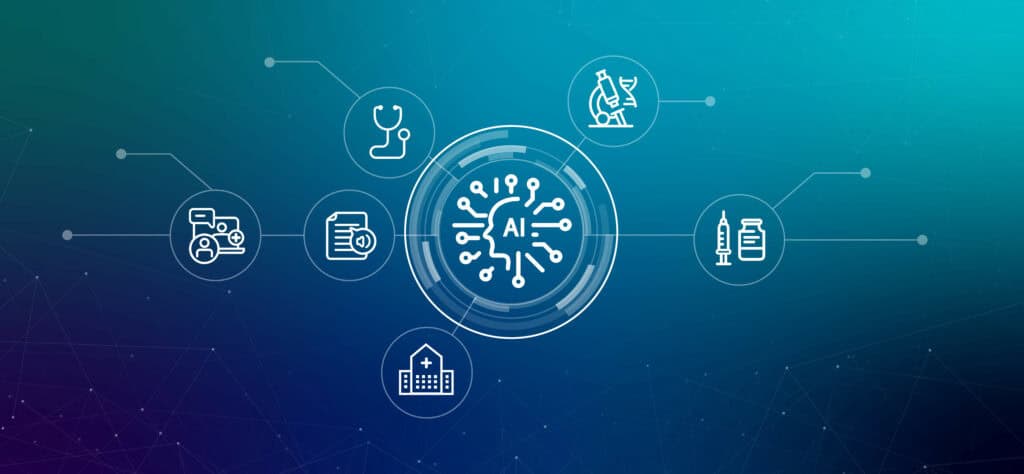
The transformative potential of Generative AI (GenAI) is becoming increasingly apparent across many sectors, but its impact on healthcare stands out as particularly revolutionary. GenAI refers to the use of machine learning models, such as Large Language Models (LLMs), which are designed to generate new data, including text, images, and even molecular structures, that can mimic or build upon existing information. These technologies are not only redefining how we think about artificial intelligence but are also paving the way for unprecedented advancements in medical care.
In healthcare, GenAI holds the promise of transforming everything from diagnostics and personalized treatment plans to drug discovery and patient care management. LLMs excel in natural language understanding and generation, allowing them to process vast amounts of unstructured data, such as medical records, research papers, and clinical trial results. This capability has already begun to change how healthcare professionals access and interpret complex medical information, leading to faster, more accurate decision-making.
The importance of GenAI in healthcare cannot be overstated. As the demands on healthcare systems continue to grow, driven by aging populations, rising healthcare costs, and the increasing complexity of diseases, GenAI offers scalable solutions that enhance both the efficiency and quality of care. GenAI models, for example, can analyse medical images, pathology slides, and genomic data with unmatched accuracy, enabling earlier detection of conditions such as cancer. Furthermore, they can simulate chemical interactions and design novel molecules, dramatically reducing the time and cost associated with drug development.
From interpreting medical images to discovering new drug compounds, GenAI is at the forefront of innovation, offering powerful tools that can significantly improve patient outcomes.
The Rise of Agentic AI
The next big trend to watch for in 2026 will be the increased deployment and implementation of “Agentic AI” solutions. The next “big thing” that is liable to go the same route as ambient listening is “Agentic-AI.” An AI Agent is a software system powered by artificial intelligence that can perform specific tasks autonomously, making decisions based on data and learning over time; in healthcare, AI agents are utilized to analyze patient data, automate administrative tasks, assist with diagnosis, recommend treatment plans, and generally streamline clinical workflows, allowing healthcare providers to focus on patient care by handling repetitive tasks.
The extraordinary aspect of AI Agents is autonomy. Rather than merely responding to inputs with canned answers, these agents can make incremental decisions, refine their reasoning as more data comes in, and even proactively identify potential issues that require human intervention. They also demonstrate deeper contextual awareness. An AI Agent assisting in a clinical decision-support scenario can pull a patient’s history, current vital signs, and relevant medical literature, then synthesize all of this information to propose diagnostic steps or treatment adjustments.
AI Voice Agents in Healthcare
A subset of Agentic AI is AI Voice Agents. Conversational voice agents are intelligent software systems that use GenAI to have natural, human-like conversations over the phone or via chat. However, do not confuse voice agents with “chatbots.” They are far more sophisticated, capable of handling complex dialogue, maintaining context, and providing personalized support 24/7.
Healthcare is not solely about clinical diagnostics and treatments; it is equally about effective communication, education, and patient adherence. This is where conversational voice agents are already making a substantial impact. They can bridge the gap between clinical encounters by responding to patient inquiries at any time, sending personalized medication reminders, or providing explanations of lab results in accessible language. When integrated with wearable devices, agents can track daily vital signs or activity levels, recognizing worrisome trends and alerting both the patient and healthcare professionals accordingly. Patients appreciate having round-the-clock access to a reliable, knowledgeable interface that offers consistent support and reassurance. By “speaking” multiple languages or adapting content to diverse cultural contexts, AI agents can also cater to patients who might otherwise struggle with traditional, English-only healthcare resources. In doing so, these systems bolster patient engagement and can lead to better adherence to treatment plans, which is increasingly important in value-based healthcare models.
What should we expect to see trending in Agentic AI and healthcare in the year ahead? Although many current AI agents remain primarily reactive, the shift toward proactive interventions seems inevitable. Instead of waiting for a patient’s call to flag worrisome symptoms or for a clinician to initiate a data query, next-generation agents will detect patterns in real time and alert stakeholders before a crisis unfolds. An agent might discern an emerging infection trend within a hospital unit by analyzing lab orders and patient vitals, then recommend proactive precautions or resource allocation. By predicting potential bottlenecks or imminent disease outbreaks, these systems could help healthcare organizations save valuable time and potentially even lives.
Where Will This All Take Us in 2026 and Beyond?
Generative Artificial Intelligence has emerged as a revolutionary force across healthcare, reshaping diagnostic tools, therapeutic pathways, administrative workflows, and drug discovery. As we peer into the horizon, the trajectory of GenAI in healthcare appears both exhilarating and complex.
The longevity of GenAI’s impact on medicine ultimately hinges on the sustained commitment of multiple stakeholders. Clinicians who interact with AI-driven systems must maintain a critical mindset, asking hard questions about algorithmic limitations. Healthcare administrators and policy leaders should continue refining frameworks that balance innovation with patient well-being. Researchers, whether in academia or industry, will push the boundaries of what is possible with generative models, from advanced protein folding to personalized vaccine development. Each of these efforts requires long-term funding, robust data infrastructures, and progressive educational initiatives that cultivate AI literacy among medical professionals.
Given the global scope of healthcare, international collaborations and data-sharing initiatives may prove decisive in accelerating advancements. By pooling resources, expertise, and diverse patient data sets, multinational coalitions could turbocharge the learning cycles of GenAI systems. Cross-border consortia have already begun forming around topics like cancer genomics and rare disease research. Incorporating GenAI into these collaborations will likely amplify the pace and scale of discoveries, especially if ethical considerations and equitable benefits remain part of the guiding principles.
One look at today’s headlines and it is easy to see that many Americans feel frustrated with a healthcare system that seems broken and plagued by systemic inefficiencies. The government, the private sector, and medical consumers themselves are spending so much on healthcare, and yet, average people are not reaping the benefits in better outcomes. Is generative AI a cure-all for all that is broken? No. But it can provide a lot of fixes in both the near and long term.
Want to Learn More?
You can also learn a lot more about GenAI and its impact on health care by reading the book in its entirety.
Co-authored with my colleague, Ritu M Uberoy, it explores the GenAI revolution in medicine and what it means for clinicians, researchers, innovators, and policymakers worldwide. Published by Taylor & Francis Group, the book is available NOW, in print and eBook formats through Amazon, Barnes & Noble, Taylor & Francis (ebook only) and other online retailers. For more information or to order your copy directly, visit the official authors’ webpage.
A Pediatric-Centric Approach to AI
Pediatric healthcare comes with its own unique challenges—fewer available data points, smaller population sizes, and higher sensitivities around communication and consent. This makes the responsible use of AI even more critical.
Dr. Morse noted that solutions must be designed with children and families in mind, not simply adapted from adult care settings. Whether deploying ambient tools, summarizing clinical notes, or streamlining administrative workflows, every use case must prioritize trust, safety, and patient experience.